
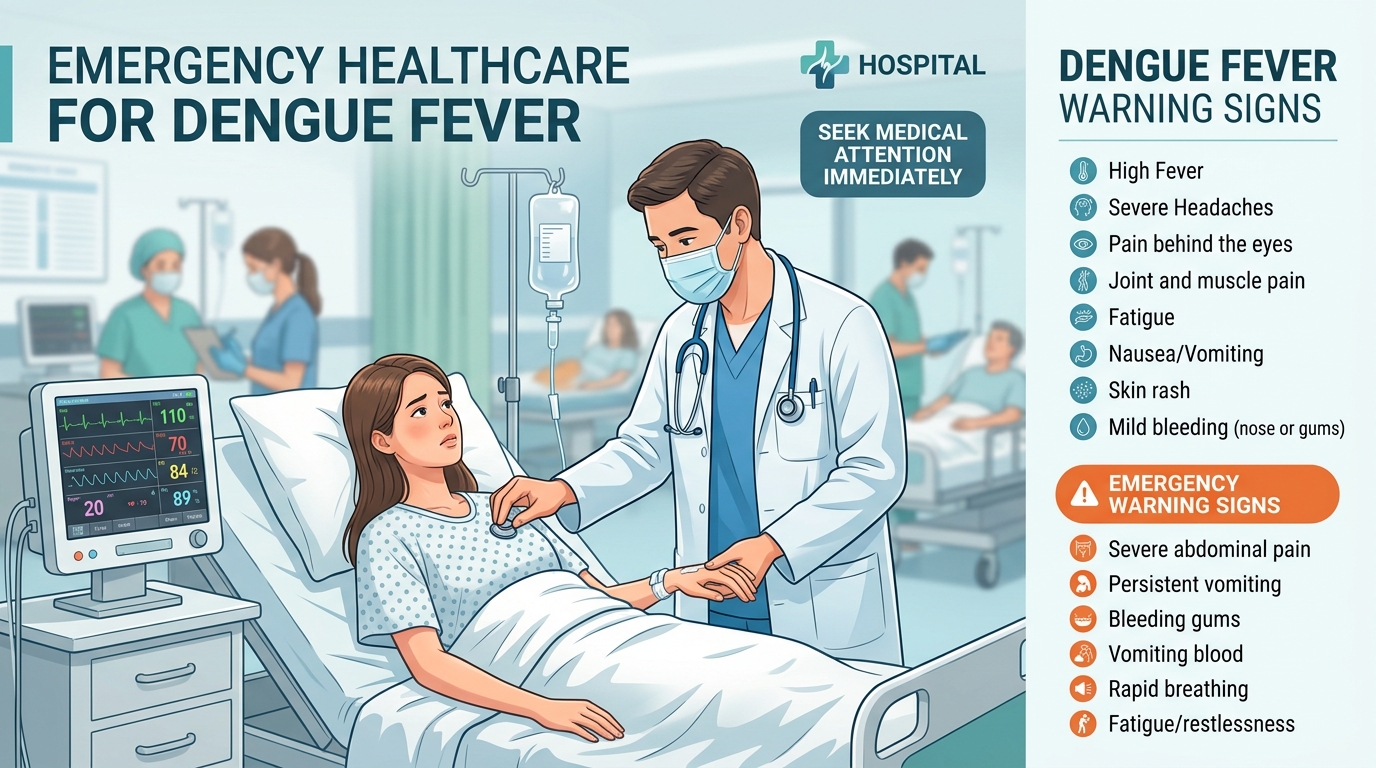
When Dengue Warning Signs Require Medical Attention
The dengue warning signs that require medical attention are not always obvious, particularly when a person appears to be recovering from fever. Some complications can develop as the fever starts to settle, making the days following the initial illness especially important. At Prudence Hospitals, patients with suspected or confirmed dengue can receive medical assessment, appropriate investigations, monitoring, and treatment based on their clinical condition. Knowing when symptoms have moved beyond routine fever can help families seek care without unnecessary delay.
This article focuses specifically on warning signs and situations that need medical attention, rather than simply listing common dengue symptoms.
Why the Fever Phase Is Not the Whole Story
Dengue illness does not necessarily follow a straightforward pattern of “fever followed by recovery.” A person may initially have a high temperature and then feel that the illness is improving when the temperature falls.
However, the period around fever reduction can be clinically important. Certain complications may become apparent during this stage.
This means feeling better because the fever has reduced should not automatically be considered complete recovery.
Doctors may recommend continued observation depending on the patient's symptoms, examination findings, test results, age, and overall health.
Dengue Warning Signs That Require Medical Attention
Certain changes should prompt medical evaluation rather than continued observation at home.
1. Persistent or Increasing Abdominal Pain
Significant abdominal pain, particularly when it is persistent or becoming worse, should not be ignored.
It may indicate that the illness is becoming more serious and requires assessment by a healthcare professional.
2. Repeated Vomiting
Occasional nausea can occur during infections, but repeated vomiting is more concerning.
It can make it difficult to maintain adequate fluid intake and may contribute to dehydration and worsening weakness.
3. Any Unusual Bleeding
Bleeding should receive medical attention, particularly when it is unexpected or persistent.
Examples include:
- Bleeding from the gums
- Nosebleeds
- Blood in vomit
- Blood in stool
- Unusually heavy menstrual bleeding
- Easy or unexplained bleeding
Do not wait for bleeding to become severe before seeking medical advice.
4. Increasing Drowsiness or Restlessness
A noticeable change in alertness or behaviour can be an important sign.
Seek medical attention if a person becomes unusually:
- Drowsy
- Confused
- Restless
- Difficult to wake
- Less responsive than usual
Such changes require prompt assessment because they may indicate that the illness is affecting the body's overall condition.
5. Difficulty Breathing
Breathing difficulty should never be dismissed as ordinary weakness from fever.
If a person develops shortness of breath, rapid breathing, or noticeable difficulty breathing, medical evaluation should be sought promptly.
6. Marked Weakness or Sudden Deterioration
A patient who suddenly becomes extremely weak, faint, unusually pale, or significantly worse after appearing stable should be assessed by a doctor.
A sudden change is often more important than how severe the original fever was.
Why Monitoring Matters During Dengue
Dengue management is not based on fever alone. Doctors may monitor several aspects of a patient's condition, including:
- Hydration status
- Blood pressure and pulse
- Urine output
- Bleeding symptoms
- Level of alertness
- Blood test results
- Ability to tolerate fluids
- Changes in overall clinical condition
The frequency of monitoring depends on the patient's individual risk and clinical findings.
This is particularly important for children, older adults, pregnant women, and people with underlying medical conditions, who may require closer medical supervision.
What Happens When You Seek Medical Attention?
A hospital assessment does not necessarily mean that every patient needs admission. The medical team first determines how serious the condition is.
Evaluation may include:
Clinical Assessment
The doctor reviews symptoms, their progression, fluid intake, urine output, medical history, and other relevant factors.
Blood Investigations
Blood tests may be recommended to assess changes associated with dengue and help doctors monitor the patient's condition.
Vital Monitoring
Blood pressure, pulse, temperature, breathing, and other clinical parameters may be monitored when required.
Treatment Planning
Based on the findings, the doctor may recommend home monitoring, outpatient follow-up, observation, or hospital-based care.
The aim is to identify deterioration early and provide appropriate support.
When Home Monitoring May Not Be Enough
Home care may be appropriate for some patients after professional evaluation. However, families should understand when the situation has changed.
Seek medical attention rather than continuing home observation when:
- New warning signs develop
- The patient cannot maintain adequate fluid intake
- Vomiting continues
- Bleeding occurs
- Urine output decreases noticeably
- Alertness changes
- Breathing becomes difficult
- The patient's overall condition deteriorates
Do not wait for every warning sign to appear. One significant concerning change can be enough to seek medical advice.
Common Mistakes Families Should Avoid
When caring for someone with suspected dengue, avoid relying solely on the apparent improvement of fever.
Other mistakes include:
- Delaying medical care after bleeding begins
- Assuming severe weakness is normal
- Ignoring changes in behaviour or alertness
- Continuing self-medication without medical guidance
- Waiting until dehydration becomes severe
- Assuming every fever-related symptom is automatically dengue
- Skipping recommended follow-up investigations
Dengue should be managed according to the patient's clinical condition rather than a fixed home-treatment routine.
Who May Need Extra Caution?
Certain patients may require a lower threshold for medical evaluation, particularly:
- Young children
- Older adults
- Pregnant women
- People with significant underlying health conditions
- Individuals unable to maintain adequate fluid intake
- Patients showing rapidly changing symptoms
For these groups, professional medical advice can help determine the safest approach to monitoring and treatment.
Conclusion
Recognising the dengue warning signs that require medical attention is essential because deterioration can sometimes occur when the initial fever appears to be improving. Persistent abdominal pain, repeated vomiting, unusual bleeding, breathing difficulty, changes in alertness, and sudden deterioration should never be ignored.
The right response is not to panic, but to recognise the change and seek appropriate medical assessment. At Prudence Hospitals, patients can receive clinical evaluation, relevant investigations, monitoring, and treatment guidance according to their individual needs. If a person with suspected or confirmed dengue develops a concerning change in condition, timely medical attention can make an important difference.