

A Case of Triple-Negative Breast Cancer
A 40-year-old woman presented with a lump in her left breast that had been growing for several months. A biopsy confirmed invasive ductal carcinoma. Immunohistochemistry showed that the tumour was triple-negative, meaning it did not express the estrogen receptor, progesterone receptor or HER2.
Triple-negative breast cancer can grow more quickly than some other breast-cancer subtypes. Because it does not respond to hormone therapy or HER2-targeted medicines, systemic treatment commonly relies on chemotherapy and other options selected by the oncology team for the individual patient.
The Treatment Course
The patient started neoadjuvant chemotherapy, which is treatment given before surgery with the goals of shrinking the tumour and treating possible microscopic disease early. She completed seven cycles.
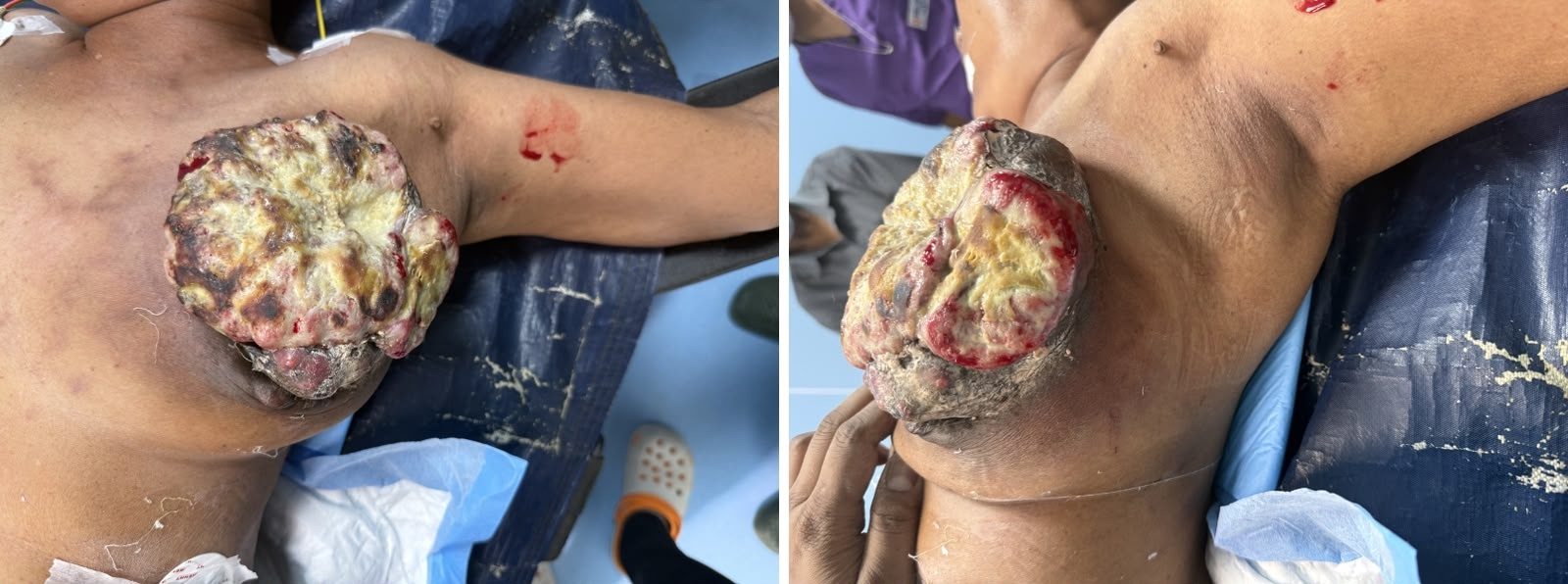
Despite treatment, the tumour continued to grow. It progressed to a large fungating mass with ulceration, bleeding and surface necrosis, showing that it was no longer responding to the chemotherapy regimen she had received.
A change to second-line chemotherapy was discussed. The patient declined further chemotherapy and expressed a clear preference to proceed with definitive local treatment.
The Decision for Surgery
Staging showed that the disease remained locally confined, with no distant metastases identified. Given the actively progressing, ulcerated and bleeding tumour, along with the patient's decision not to continue systemic therapy, the team discussed modified radical mastectomy as a way to achieve local disease control and symptom relief.
This was an individualized decision rather than the usual treatment sequence. It balanced the tumour's progression, the available treatment options and the patient's informed preferences.
Content warning: The clinical images below contain graphic tumour, surgical-specimen and postoperative content.
Modified Radical Mastectomy
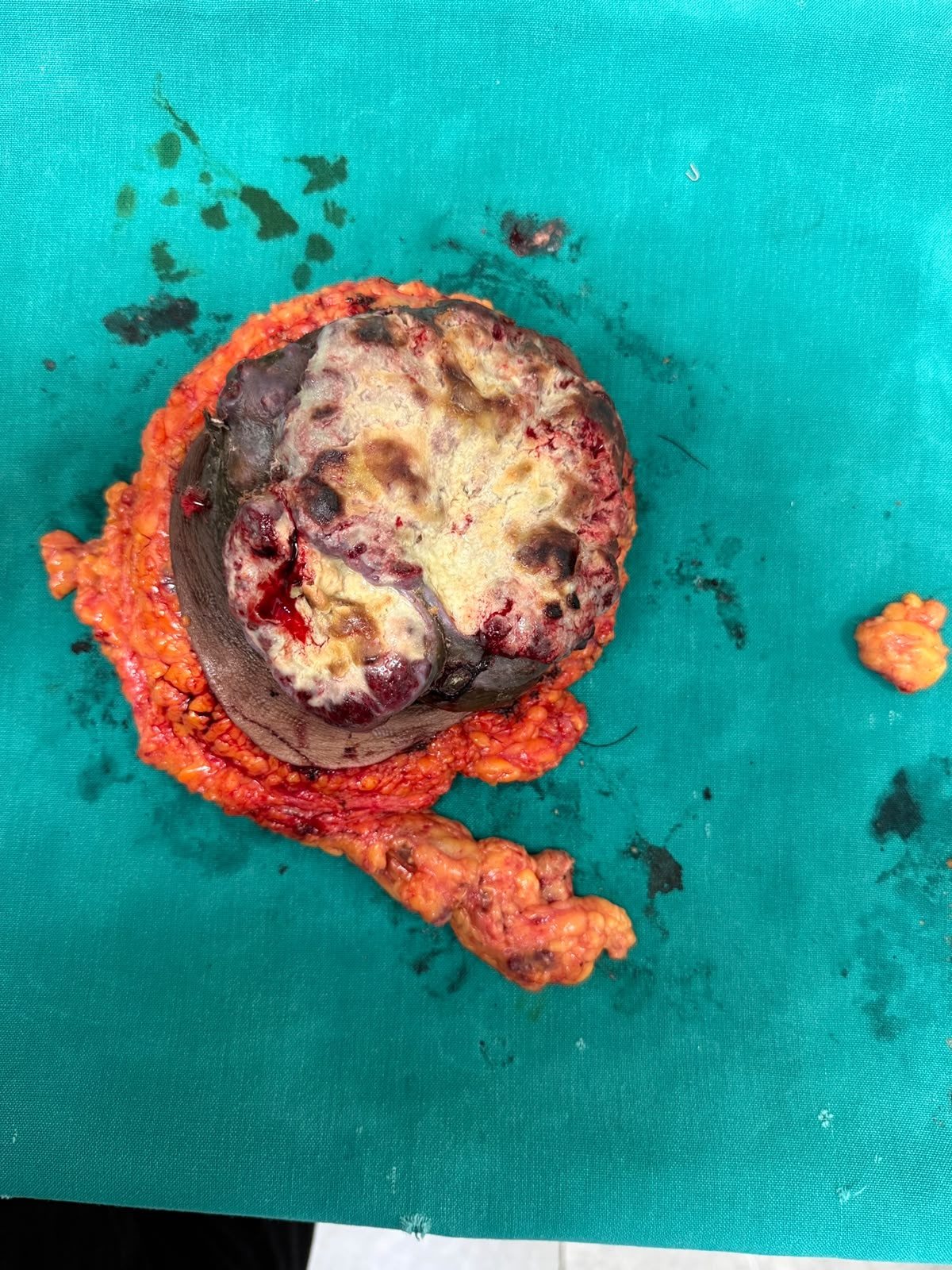
A modified radical mastectomy was performed. The operation removed the breast tissue, nipple-areolar complex and axillary lymph nodes while preserving the pectoralis major muscle.
Recovery
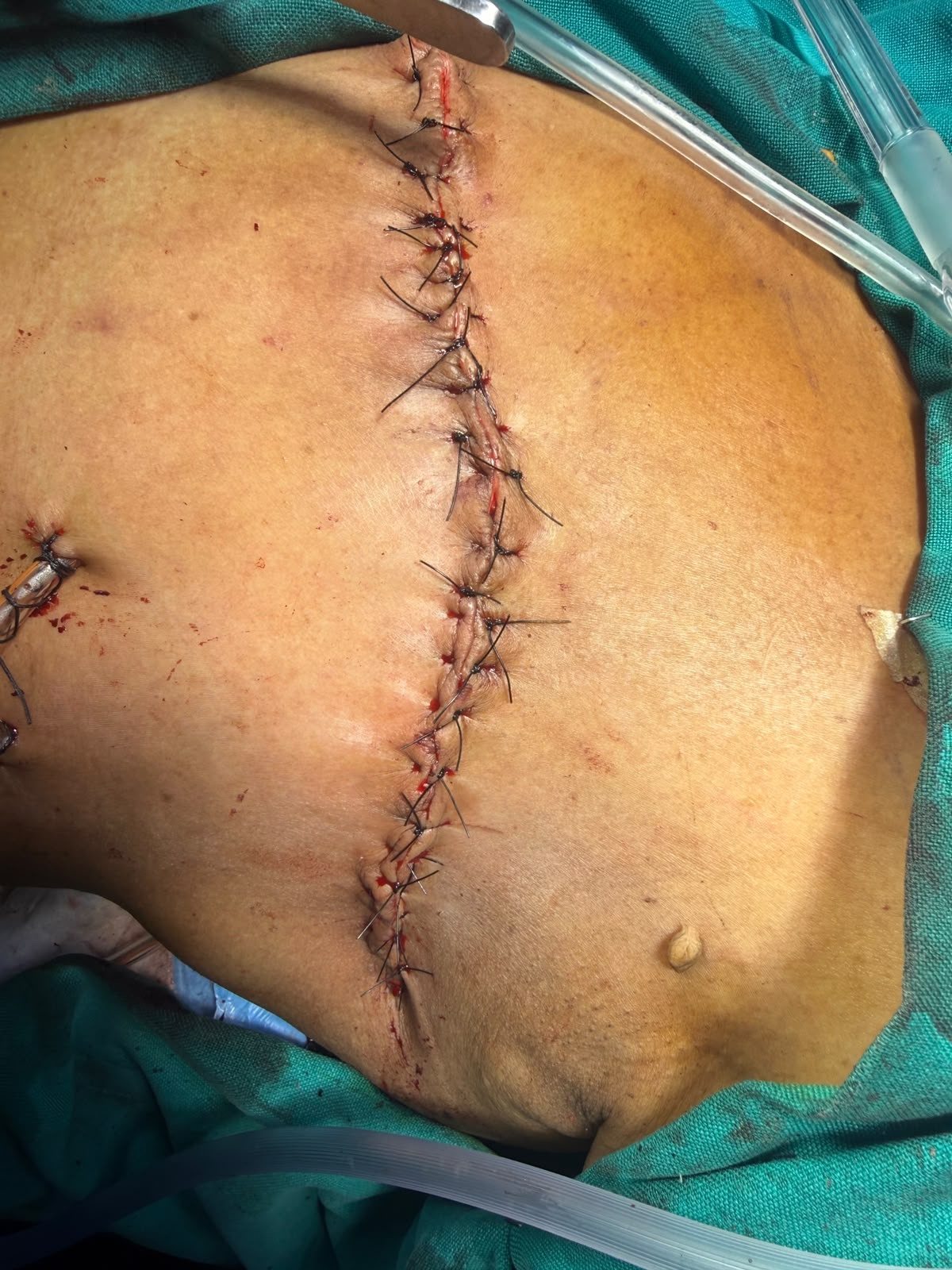
The surgery proceeded smoothly, and the patient recovered without complications. She was discharged in good condition on postoperative day 3.
The Bigger Picture
- Treatment response must be monitored closely. Some triple-negative breast cancers can progress despite standard neoadjuvant chemotherapy.
- Local control may become urgent. An ulcerated, bleeding or rapidly enlarging tumour may require surgery for symptom relief and disease control when clinically appropriate.
- Patient autonomy matters. Treatment planning must consider both sound oncology guidance and the patient's informed choices.
- Ongoing multidisciplinary care is essential. Final histopathology, tumour biology and recovery help guide consideration of adjuvant treatment and close follow-up.
This case illustrates the aggressive behaviour that triple-negative breast cancer can show and the importance of adapting treatment when the disease does not respond as expected. Surgery provided a practical option for local control after further chemotherapy was declined.
Patient details have been altered or omitted to protect privacy. The clinical images are used with patient consent for educational purposes. This article provides general awareness and does not replace an individual medical consultation.